A talk by Roy Allen BSc(Eng), ACGI, MIET, PGCE, CRE
Roy started his talk by saying that a common theme throughout his career was ‘asking questions’. He then went on to describe some examples.
Roy started his talk by saying that a common theme throughout his career was ‘asking questions’. He then went on to describe some examples.
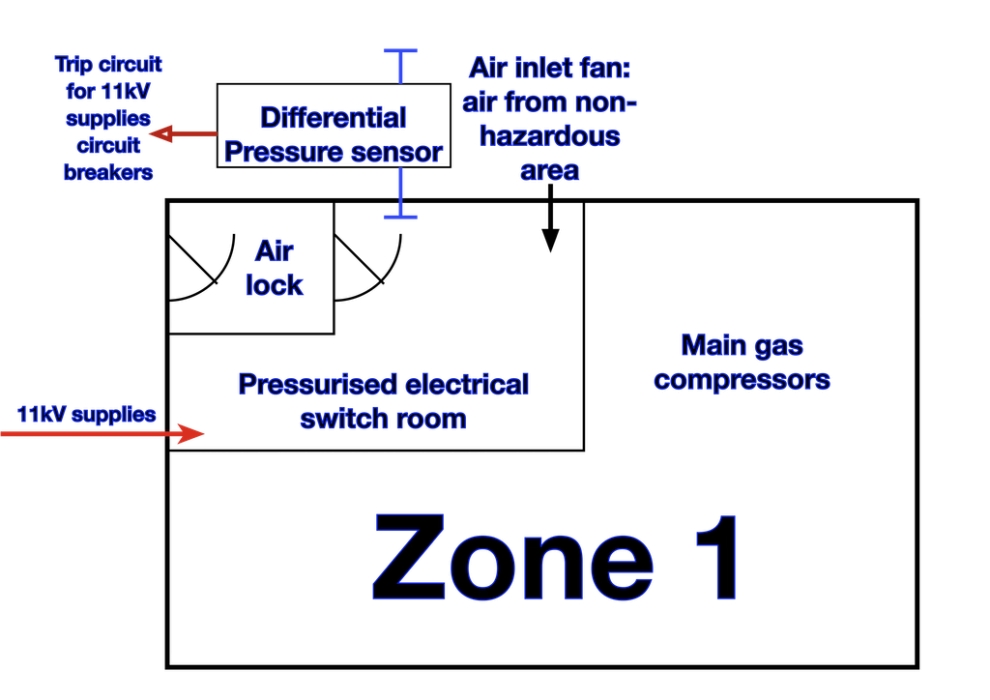
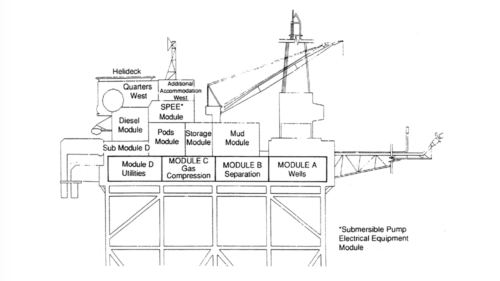
As a consultant in 1975 Roy was tasked with trying to make the electrical design of the Ninian Central and Ninian South oil rigs in the North Sea as similar as possible. This meant that he had to ask “How can high voltage switchgear be located in a zone 1 hazardous area?”, an area likely to contain explosive gas. His answer was to build a pressurised electrical switch room within the zone 1 main gas compressors module. On a later visit to the platform he saw a sign on the door saying “To collect your P45, leave both air lock doors open”.
The images below show the Ninian Central platform and a schematic of Roy's solution.
Click on an image to see a larger version.
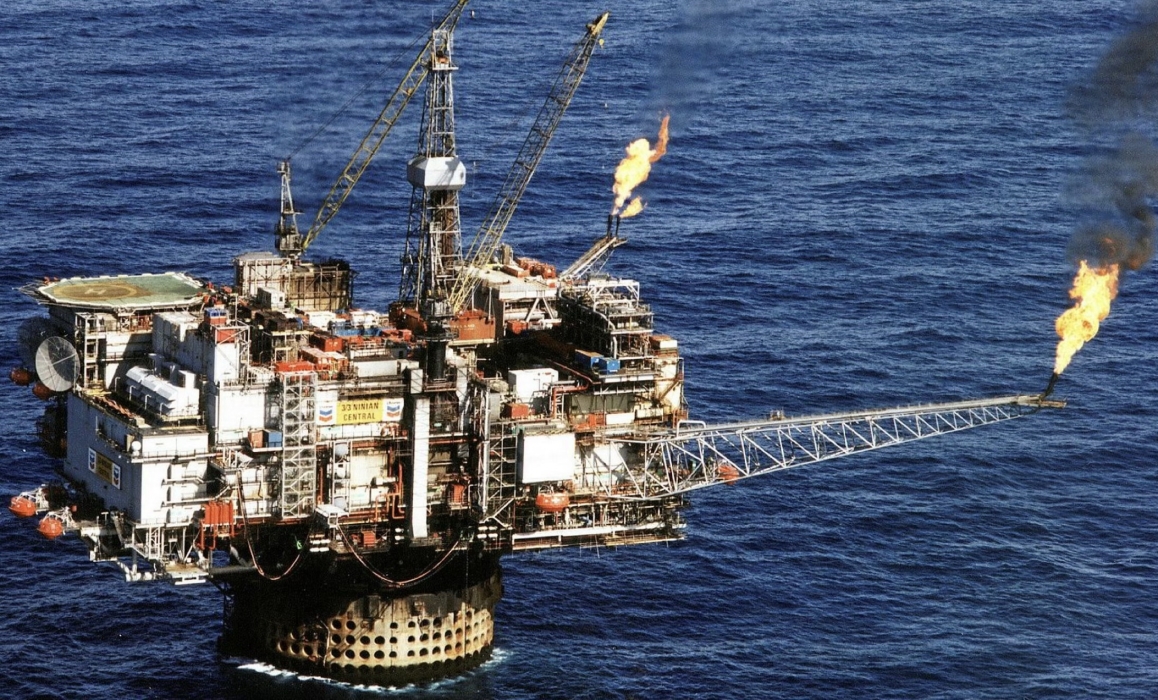 Ninian Central platform
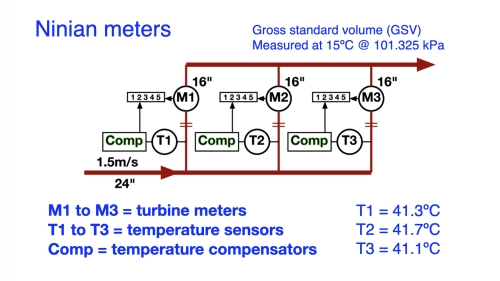
A few years later, while working for BP, the question was “Is the Ninian platform operator receiving the correct allocation of oil?” To answer this question involved investigating the three oil flow meters on the Ninian Central platform, only to find that the temperature correction factor used was that used in the US, which, although only a difference of 0.56 degrees C, resulted in an error of 0.04%. This small error soon adds up to a lot of oil over time.
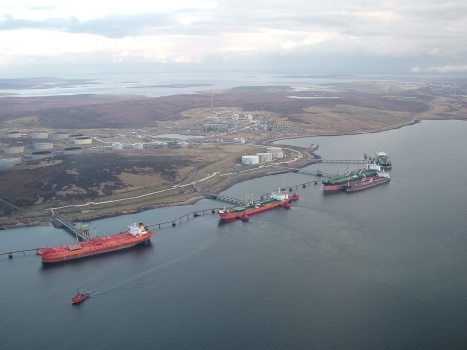
In 1979 at the Sullom Voe oil terminal on the Shetland Isles it was noticed that the amount of concrete being produced by the concrete batching plant was considerably higher than expected. So, “Where is the Sullom Voe concrete going?” was the question. It transpired that the contractors building the foundations for the buildings and plant did not have to pay for the concrete, so they made the foundations bigger than as shown on the plan.
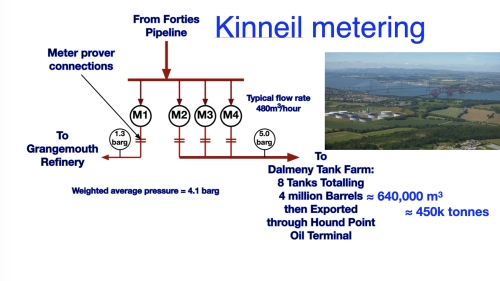
The Kinneil processing plant on the Firth of Forth receives crude oil from the BP Fortes pipeline. Some oil is sent to the Grangemouth Refinery and the rest to the Dalmeny Tank Farm. Were the measured amounts of oil going to each location correct?
Four flow meters were used, one for oil going to Grangemouth and three for the oil going to Dalmeny, with each of these meters calibrated using a meter proving loop. It was found that, whereas the flow rate to Dalmeny was typically 480 m3/hr, the proving loop was being run at 750 m3/hr, resulting in a significant error from the meters.
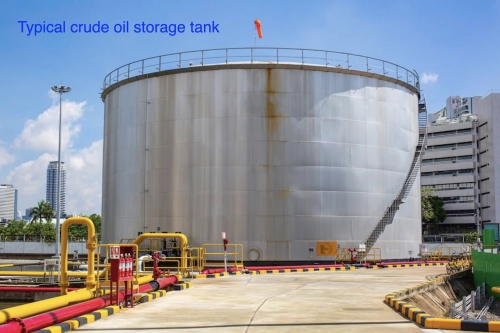
Oil storage tanks tend to be made of thicker steel plate at the bottom, than further up. To determine the amount of oil in the tank, knowing only the level, a ‘strapping table’ is used. This is basically a look-up table of height against volume. To produce the table the circumference of the tank is measured at each height where there is a change of plate thickness and the volume per unit height calculated. It was noticed that there was a larger than average jump in the volume at one particular point. The question was ‘Why?’
The circumference of the tank is measured using a flexible tape. It seems that the end of the tape was damaged during the measurements, so the one metre mark was used as the start point for the upper measurements. However, they forgot to make the adjustment for those upper measurements!
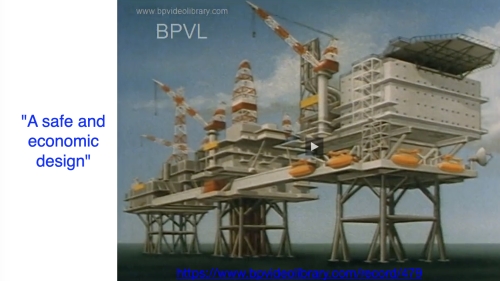
In 1980 Roy was asked “Is the proposed rig design for the Ula project feasible?” The proposal for the production oil rig was to use a ‘jack-up’ design, more normally used for exploration drilling rigs. A gravity base and the topsides, with the four legs raised, would be floated out and then the legs lowered so that the base was on the sea bed and the topside well above the sea level. The conclusion was that:
Consequently, the design was changed to a three-platform arrangement, with each platform using a conventional steel jacket (a collection of braced legs).
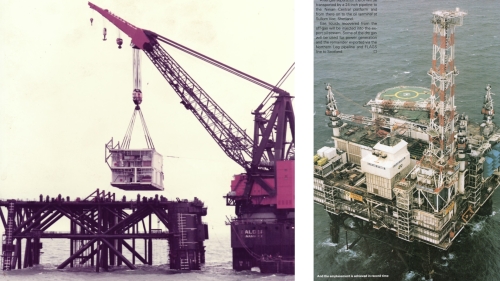
In 1981 Roy was asked another question: “Will the modules fit on the BP Magnus platform jacket?” The top of the jacket included a number of ‘pins’, each with a conical top (with the top of the cone cut off). Each module then had holes to accept the pins. The holes were slightly larger than the diameter of the pins and ‘shims’ were used to position the module correctly. Roy spotted, just in time, that the contract to make the shims had not been let, and took rapid remedial action. Having decided that all the modules would fit, the installation of all 19 modules took only eight days.
The photo shows the first module being loaded and the completed Magnus platform.
In 1988 the question “Why did Piper Alpha catch fire?’” was asked after 167 people were killed in 1988. Roy ran through the following chain of events.
Previously:
6th & 7th July 1988:
Roy then listed the lessons learnt as:
Roy’s career then took different tack when he became a teacher in 1992. His only comment was about one of his favourite questions that he asked his pupils.
“If the ground reaction force equals the weight of an object placed on the ground, how does the ground know how hard to push?”
Later, in 2014, the question was asked “Why can't a boardwalk be built on East Preston beach?”. Some of the reasons against doing it were:
So Roy's design criteria were:
Roy also pointed out that the boardwalk is positioned 4m above the high tide level so that users can see the water lapping on the shore and watch their grandchildren playing at the water’s edge. They never did find out who owned that part of the beach.
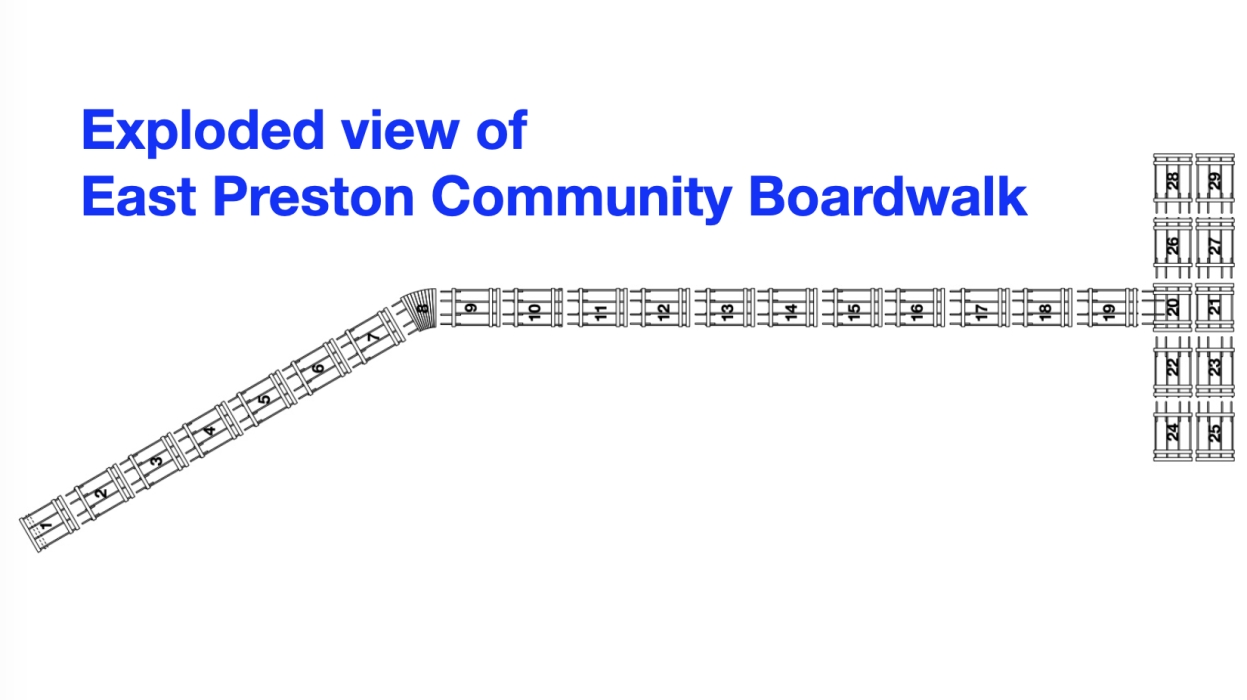
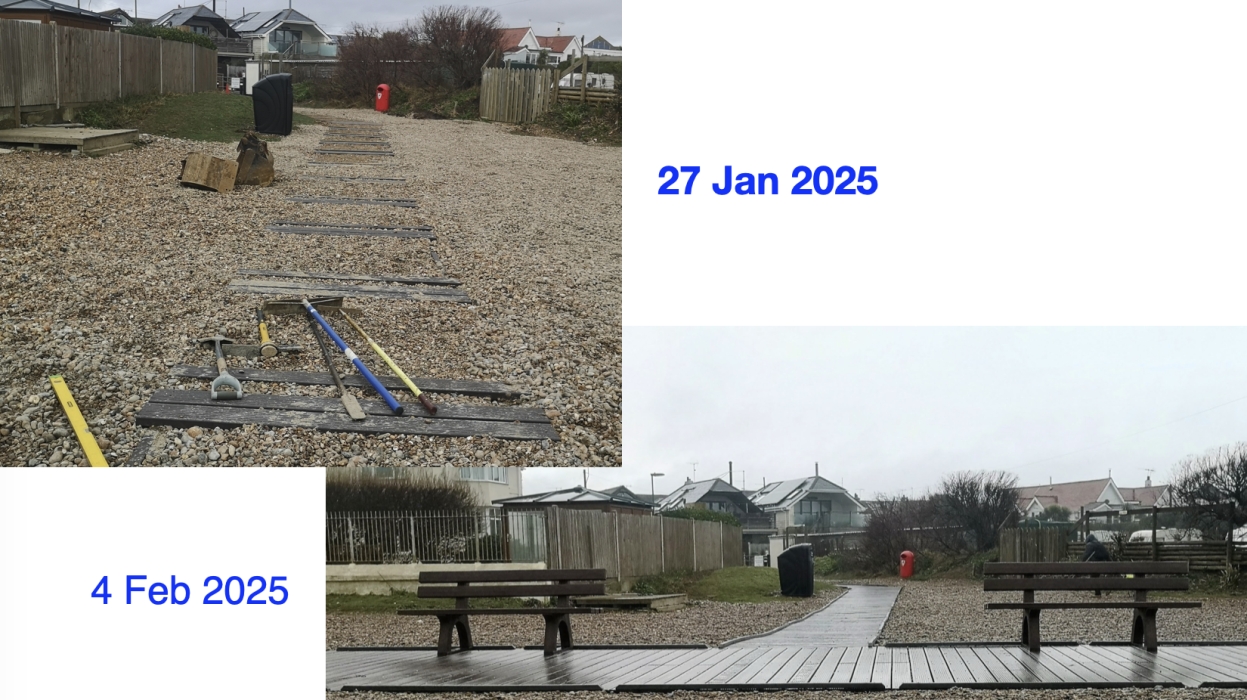
The images below show the design of the boardwalk, along with consctruction in progress and the completed boardwalk.
Click on an image to see a larger version.
Following a varied, but very interesting talk the audience thanked Roy in the usual way.
Report by David James